
 Canada
  Alberta
  British Columbia
  Manitoba
 New Brunswick
  Newfoundland Labrador
  Nova Scotia
  Ontario
  Prince Edward Island
  Quebec
  Saskatchewan
  United States
  Belgium
 France
  Italy
Italy  Switzerland
Elsewhere
 Elsewhere
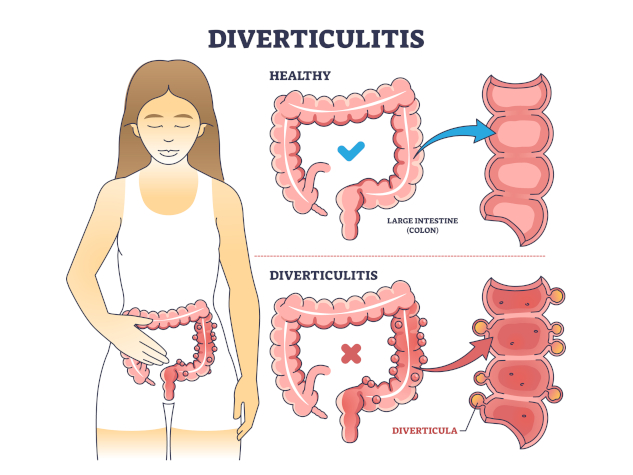
After an episode of diverticulitis, one question often comes up: can it happen again? And if so, why do some people experience recurrences while others never do? Diet is often the first thing that comes to mind, but is it really the only factor involved? Could constipation, stress, lifestyle habits, or even certain medications also influence the risk of new flare-ups?
In reality, diverticulitis is a multifactorial condition. Research points to several factors that may help explain why some people experience recurrences while others do not. Let’s take a closer look at the main elements that may influence this risk.

Yes, we’re talking about fiber again, and for good reason. Fiber is one of the most important factors when it comes to digestive health and diverticulitis. Why? Because dietary fiber helps increase stool bulk and makes it easier to pass through the intestines. In other words, it helps the colon function more efficiently and with less pressure. Excessive pressure in the colon has long been proposed as one of the mechanisms that may contribute to the formation and irritation of diverticula, the small pouches that develop in the colon wall.
It is therefore not surprising that several studies have observed that a diet with higher fiber intake is associated with a lower risk of diverticulitis. Fiber is mainly found in fruits, vegetables, legumes, whole grains, nuts and seeds. In short, foods that most of us benefit from eating more often.
However, a word of caution: increasing fiber intake too quickly or not drinking enough fluids can sometimes have the opposite effect of what you’re aiming for. Bloating, discomfort, and stools that are harder to pass are not exactly the goal. It’s best to increase fiber gradually while ensuring adequate hydration so the digestive system has time to adjust.
Fiber is closely linked to another important factor: bowel transit. When intestinal transit slows down, stools can become harder, drier, and more difficult to pass. As a result, people often need to strain more, and pressure inside the colon can increase. Over time, this pressure may weaken the intestinal wall and promote inflammation of diverticula.
In other words, sluggish bowel transit is not only uncomfortable, it may also create a less favorable environment for colon health and promote constipation. This is where fiber once again takes the spotlight. By helping soften stools and making them easier to pass, fiber supports more regular bowel movements.
But fiber does not work alone. To be effective, it also needs a little help. As mentioned earlier, adequate hydration is essential. Without enough fluids, even a high-fiber diet can become counterproductive. Another effective strategy is regular physical activity. It works by stimulating bowel movements and supporting overall digestive health.



Leave a Reply